

Identification Verification and KYC Needs
Identity Document Upload
Swiss players need to go through KYC verification before they can withdraw funds, and often before making larger deposits. The dashboard shows you precisely which documents are needed. Your primary ID can be a legitimate passport, national ID card, or Swiss driving license. Upload colour scans that reveal all four corners, with no glare and everything clear. The system runs automatic checks against databases to identify fakes or tampering, and expired documents will not pass. For proof of address, you’ll need a utility bill, bank statement, or formal government letter dated within the last three months. Digital statements are fine as long as your name and address are clearly visible.
Transactional Verification
You’ll face extra verification when you link a payment method. For credit and debit cards, you need a snapshot of the physical card showing the first six and last four digits—cover up the CVV. The name on the card must correspond to your verified account name. If you use an e-wallet, take a screen grab of your profile page that shows the registered email address; it must match the one on your casino account. Bank transfer users submit a bank statement or online banking screenshot with your IBAN and account holder name. These steps aid in preventing money laundering and guarantee withdrawals go back to the same source as your deposit, which is a key part of the platform’s anti-fraud setup.
- Current passport, national ID, or driving license (full-color scan, all corners visible)
- Proof of address dated within 90 days (household bill, bank statement, government letter)
- Card payment: snapshot of card front with middle digits and CVV obscured
- E-wallet: screen grab of profile page confirming email and name match
- Bank transfer: bank statement or online banking screenshot indicating IBAN
- All documents must be in the same name as the registered account
Session Management, Inactivity Timeouts, and Automatic Sign-Outs Explained
What Triggers a Session Expiration
Boomerang Casino logs you out instantly if you’re away for too long. The timer starts after approximately 15 to 30 minutes with no cursor movement, clicks, taps, or key presses. The payment and account pages frequently have tighter limits than the game lobby. When the timer runs down, a pop-up warns you that the session will end in 60 seconds unless you respond. If you don’t, the session terminates and you’re back at the sign-in page. Never fear losing progress in RNG slots or table games—everything is saved server-side, so you’ll continue exactly where you paused after re-entering. You can also sign out yourself with the designated button, which ends the session right away. At live dealer tables, the dealer’s rules might move your seat faster if you leave it.
Session Lifespan and Stay-Logged-In Options
If you remain active, your session can continue for a long time, but the system still checks in on you. Every hour of continuous play, the backend silently re-validates your session token. If something seems wrong—like a sudden IP switch or a device fingerprint that doesn’t align—you’ll be required to re-enter your password. Boomerang Casino doesn’t provide a “remember me” option that keeps you logged in for days. Closing the browser terminates the session completely, so you’ll need to log in again each time. You can also press the logout button to wrap up immediately, no depending on the inactivity timer. The full arrangement puts account security ahead of convenience, shrinking the window for credential theft.
Security Architecture Behind Session Expiry
Every login session relies on token-based authentication. Once you sign in properly, the server provides a short-lived access token (good for approximately 15 minutes) and a longer-lived refresh token. The access token goes along with every API request and gets validated cryptographically, no database lookups needed, which keeps gameplay snappy. The refresh token silently renews access as long as you’re engaged. When the inactivity timeout activates, the server revokes the refresh token. The next API call gets an denied response, and you’re sent to the login page. All communication employs TLS 1.3, and stored passwords are hashed and salted with bcrypt—defense in depth, clear and straightforward.
Account Creation and the First Login
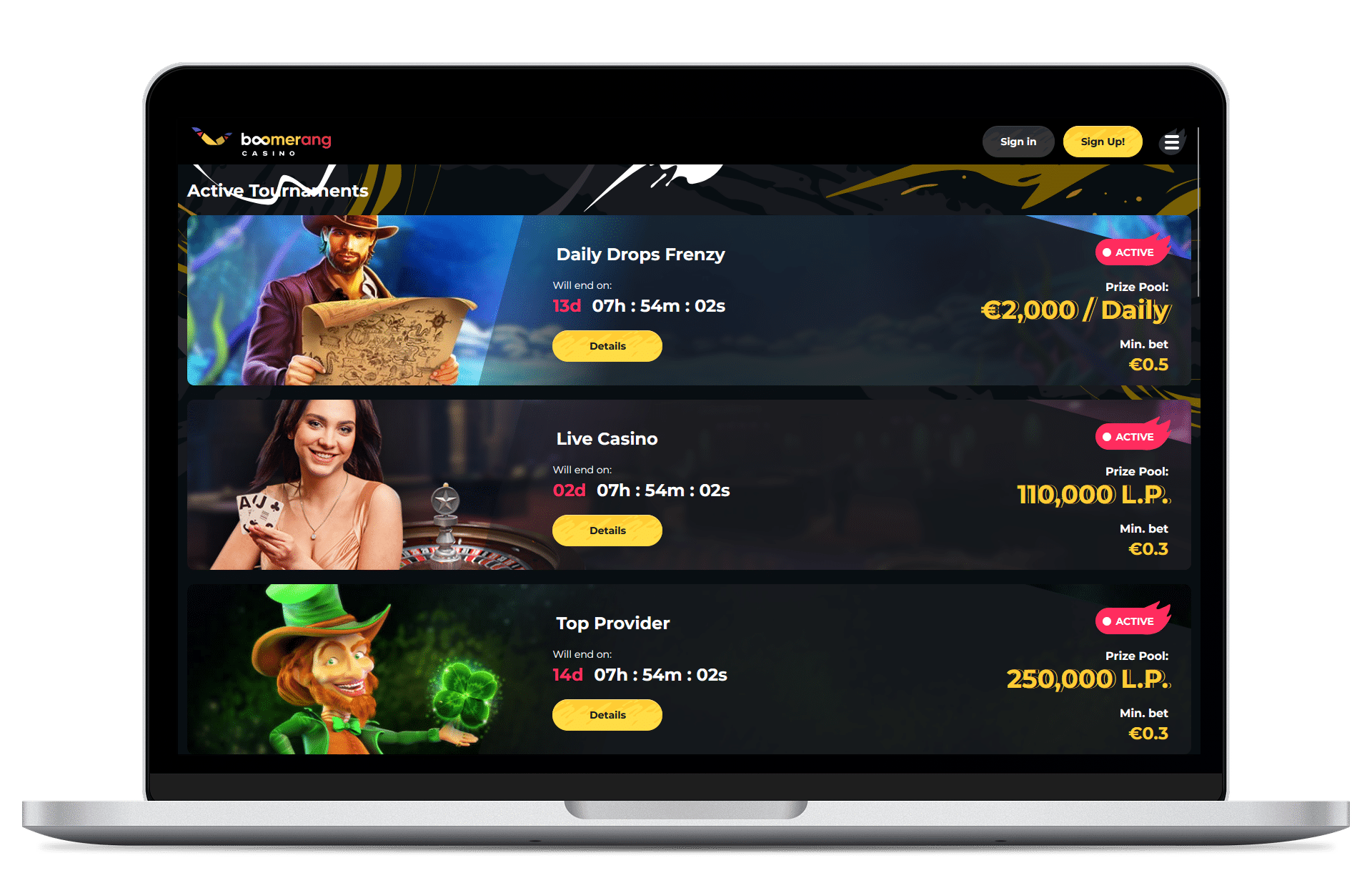
You’ll need to provide accurate personal data when registering at Boomerang Casino: your entire legal name, date of birth, home address, email, plus a username and password. Swiss law mandates players to be at least 18, and the platform verifies your birth date instantly, stopping anyone underage. Once you file the form, a verification email normally lands in your inbox within two minutes, but spam filters can hold it up. Click the confirmation link to enable your account, and you’ll be directed straight to the login page for your first session.
On your first login, you’ll have to study and agree to the complete terms and conditions, privacy policy, and responsible gambling agreements. There’s no skipping this. Pay close attention to the bits about bonus eligibility, withdrawal restrictions, and what happens if your account goes dormant. Behind the scenes, the platform captures your IP address and device fingerprint to create a security baseline. If you’re logging in from a Swiss mobile network, a silent geolocation check runs. If your declared country doesn’t align with where you really are, the system throws a soft block that needs manual review before you can play.
Login Recovery and Account Access Reinstatement
The Normal Recovery Process
Forgot your password? Click “Forgot Password” below the password field on the login page. Enter the email address tied to your account. The system dispatches a reset link that remains valid for 60 minutes and can only be used once. If you don’t see the email, review your spam and promotions folders before requesting for another link—each new request kills any earlier tokens. Once you click the link, you’ll establish a new password. It needs at least eight characters, mixing uppercase, lowercase, numbers, and special characters. The system won’t let you recycle any of your last five passwords. After a confirmed reset, all active sessions are ended, so any other devices will have to sign in again.
Assisted Recovery via Support
If you’ve misplaced access to the email on file, the automated reset won’t succeed. You’ll need to reach out to customer support via live chat or email. They’ll require for ID verification before changing anything—usually a government-issued photo ID that corresponds to your account name and date of birth, plus proof of address like a new utility bill or bank statement. If the scans aren’t sufficient, they might require a short video call. Once they validate your identity, the support team changes your email and triggers a new password reset. This manual route can need anywhere from a few hours to a full business day, depending on how complex the verification is and how loaded the queue is.
Two-Factor Authentication and Protecting Your Account
Enabling and Setting Up 2FA
Two-step verification isn’t compulsory, but you’d be sensible to enable it. Go to account settings, find the Security tab, and activate it. You’ll need an authenticator app like Google Authenticator, Authy, or Microsoft Authenticator. The setup wizard displays a QR code; scan it with the app to link your account. Right away, six-digit time-based codes begin generating, and the system asks for a test code to verify everything’s connected. Once 2FA is active, every login requires your password plus the current six-digit code. During setup, you get ten single-use backup codes—store them offline, in a secure place. If you’re getting low, generate a new set, and any leftover old codes become worthless.
Login Notifications and Monitoring
Each time you log in, an automated email lands in your inbox. It displays the timestamp, rough location based on your IP, browser, and operating system. If you ever get nzz.ch a notification for a login you don’t know, there’s a link inside that lets you end that session instantly and force a password change. This monitoring works independent of whether you have 2FA turned on—all accounts get these alerts. Make sure your email account is locked down with a strong password and its own 2FA, because if someone breaks into your email, the alerts won’t help. The combination of alerts and remote session kill-switch helps you detect unauthorized access before it does actual damage.
Frequent Login Troubles and Their Fixes
Credential Errors and Account Freezes
Too many wrong password tries will lock your account for a while, a defense against brute-force attacks. After six straight incorrect tries, you’re locked out for 30 minutes. During that time, even the right password won’t get you in. The counter resets once you log in properly or after the lockout period ends. Don’t keep trying different passwords—after two failed attempts, just start a password reset. That way you avoid a lockout and get back in faster. The lockout is tied to your account, not your IP address, so attackers can’t dodge it by switching networks.
Browser and Device Compatibility Issues
Sometimes login problems and session timeouts come from your own device, not the casino’s servers. Ad blockers, script blockers, and privacy extensions can mess with the authentication scripts that handle session tokens. The platform runs best on up-to-date versions of Chrome, Firefox, Safari, and Edge. Older browsers might fail the security handshake. If you’re stuck in a login loop where the form keeps redirecting without logging you in, clear your cached data and cookies—that often resolves it. On mobile, the native iOS or Android app gives you a more reliable login experience than a mobile browser, with fewer compatibility headaches.
Geolocation and VPN Limits
If you’re a Swiss player traveling outside the country, you might hit geolocation blocks because the platform’s license restricts access from certain places. IP addresses from blocked countries get denied at the login stage, before you even authenticate. VPNs and proxies also trigger security flags. Sure, VPNs are great for privacy, but the casino has to see your real location to stay compliant. So if you normally use a VPN, turn it off before logging into Boomerang Casino. If you travel often between allowed jurisdictions, let support know your travel patterns—that can stop unnecessary temporary restrictions from affecting your account.
Account Settings, Mobile Sign-In, and Session Management Tools
Active Session Overview
Your account dashboard has a session management panel that shows every live session https://boomerangkazino.com/de-ch/login/. Each entry lists the device type, browser, operating system, approximate location, and when the session started. You can scan the list to make sure you identify all connections. Next to each session, a “Terminate” button lets you remotely disconnect that specific device. So if you forgot to log out from a hotel business center computer, you can end that session from your phone without changing your password. The panel updates in real time—terminated sessions clear in seconds. That kind of fine-grained control keeps your account secure without a lot of hassle.
Deposit and Play Spending Limits
Boomerang Casino’s responsible gambling tools connect to session management. You can set deposit limits that limit how much you can add to your account per day, week, or month. Hitting that cap blocks further deposits until the limit resets, which indirectly reins in how long your session can go. There’s also a reality check feature that shows up at intervals you choose, showing how long you’ve been playing, total wagered, and your net result. You have to acknowledge the pop-up. If you don’t respond within the inactivity window set for that overlay, the session terminates automatically. These tools keep you mindful of time spent and are wired directly into the session timeout system.
Smartphone Login and Biometric Verification
The Boomerang Casino handheld app lets you log in with biometrics in place of typing your password each time. On Apple devices, you can activate Face ID or Touch ID after your first hand-operated login. The app keeps an encrypted authentication token in the device’s secure enclave, and it’s only unlocked after a successful biometric check. Android users with fingerprint or face unlock get the same setup. Biometric login doesn’t substitute your password—it’s just a quicker way to re-authenticate. For delicate stuff like withdrawals or changing personal details, you’ll still need to enter your full password, adding an extra layer for dangerous actions.
App Session Behavior and Push Notifications
Mobile sessions behave a bit differently from desktop ones. If you jump to another app, the Boomerang Casino app lingers in the background for about 5 minutes. Head back within that window, and you’ll continue right where you left off without logging in again. Wait longer, and you’ll need to use biometrics or your password. Push notifications for security events—login alerts, password change confirmations, withdrawal status updates—pop up right on your device. You can modify notification preferences in the app settings. If you turn off security push notifications, you lose that passive monitoring, so you’ll want to count on email alerts instead.
- Install the official app from the Apple App Store or Google Play Store.
- Sign in yourself the first time with your email and password.
- Go to Settings and turn on biometric login for fast access later.
- Verify your notification preferences to keep security alerts on.
- Learn how sessions behave when you switch apps.